
Own, Lease, or Rent? A Cost-of-Ownership Guide by Refuse Truck Type
Author
Richard Kemner
Date Published

Own, Lease, or Rent?
A cost-of-ownership guide by refuse truck type.
By Richard Kemner · RDK Truck Sales · Tampa, Florida
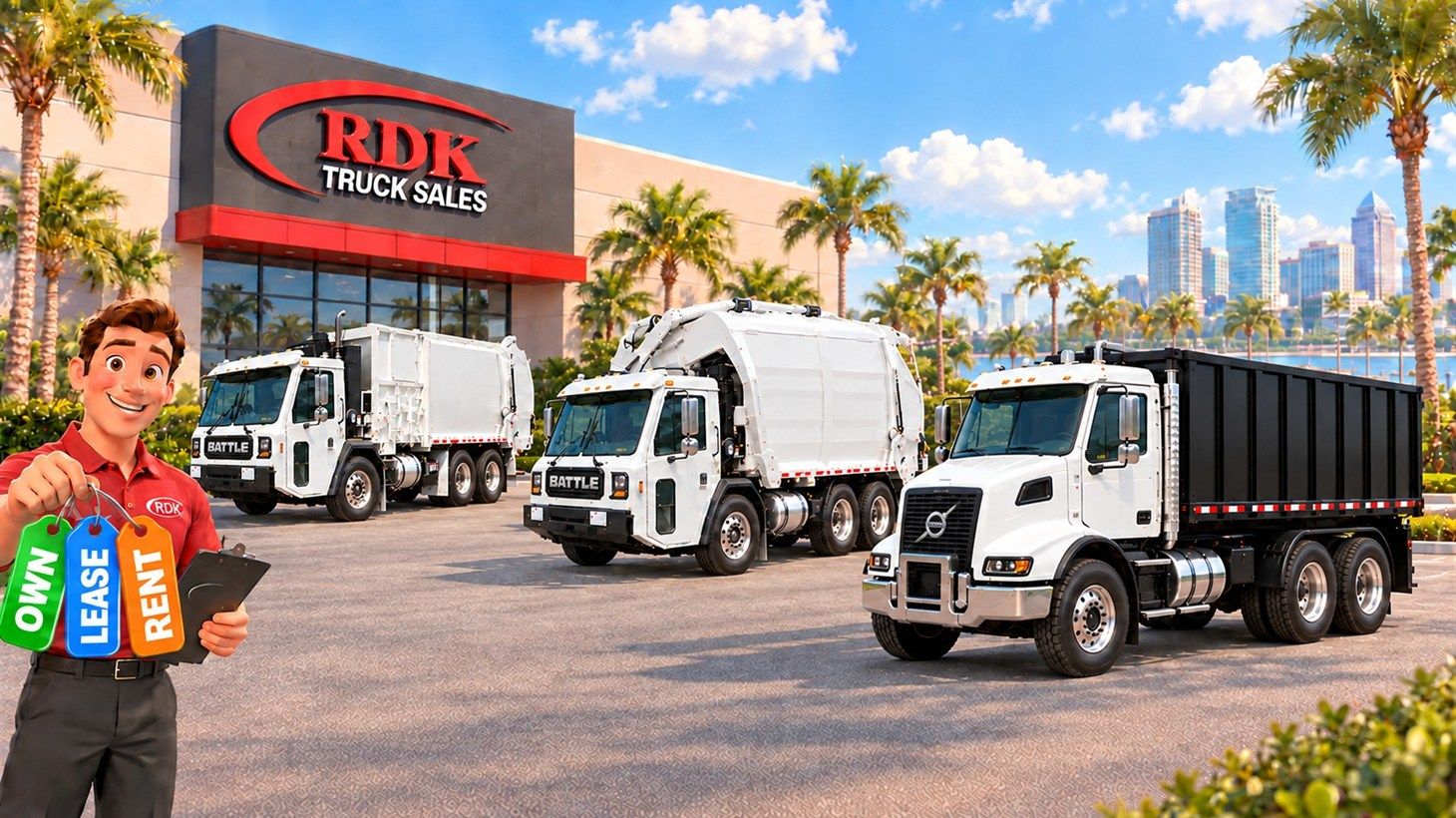
Every refuse truck wears differently. A truck's body style, route, and duty cycle determine how fast cost of ownership climbs, and that, more than sticker price, should drive whether you own, lease, or rent, and for how long.
This guide walks through the four most common refuse configurations, the real-world wear we see in the field, and the lease or ownership sweet spot for each.
The core idea is simple: cost of ownership rises as a truck ages and accumulates cycles.
The Three Choices: Own vs. Lease vs. Rent
| Option | Best for | Upside | Trade-off |
|---|---|---|---|
| Own (buy) | Low-cycle, low-wear use; long-term keepers; asset on the books | Full ownership, no term limits, build equity, Section 179 / depreciation | You carry all repair cost as it ages; highest exposure on high-cycle trucks; big upfront capital |
| Lease | Predictable replacement cadence; municipalities matching multi-year contracts | Lower monthly cost, predictable budget, warranty covers much of the term; walk-away, purchase, or FMV; backed by the bank | Term commitment; usage limits (average 60 hrs/wk or less); return-condition standards |
| Rent | Short-term needs, surge or seasonal work, downtime coverage, trying before committing | Maximum flexibility, no long commitment, back on the road fast, no-charge service consultant | Highest cost per day for long-term use; not building toward ownership |
A lease can be structured three ways: Walk-Away (return the truck, no buyout), Purchase Option (buy at a pre-agreed price), or FMV (the end price is set by fair market value at lease end). And if RDK ever changes, your lease doesn't. It's backed by a major financial institution, and you continue with the bank for the remainder of the term.
How to Choose Your Term: The Cost-of-Ownership Curve
Three forces decide when a truck stops being cheap to keep:
- Body and hydraulic wear: cylinders, packer blades and shoes, arms, grabbers, hoists. Driven by cycle count.
- Chassis and suspension fatigue: from stop-and-go duty, residual twisting, and heavy loads.
- Emissions and electronics: DPF/DEF, ECU, sensors, A/C, wiring. Often the true limiter, driven by idle time and low-speed running that starves passive regen.
The right term cycles you out just before these curves turn up together. Each truck type has its own answer.
Automated Side Loader (ASL)
The highest cost-of-ownership risk of any unit. Lease first. Short term.
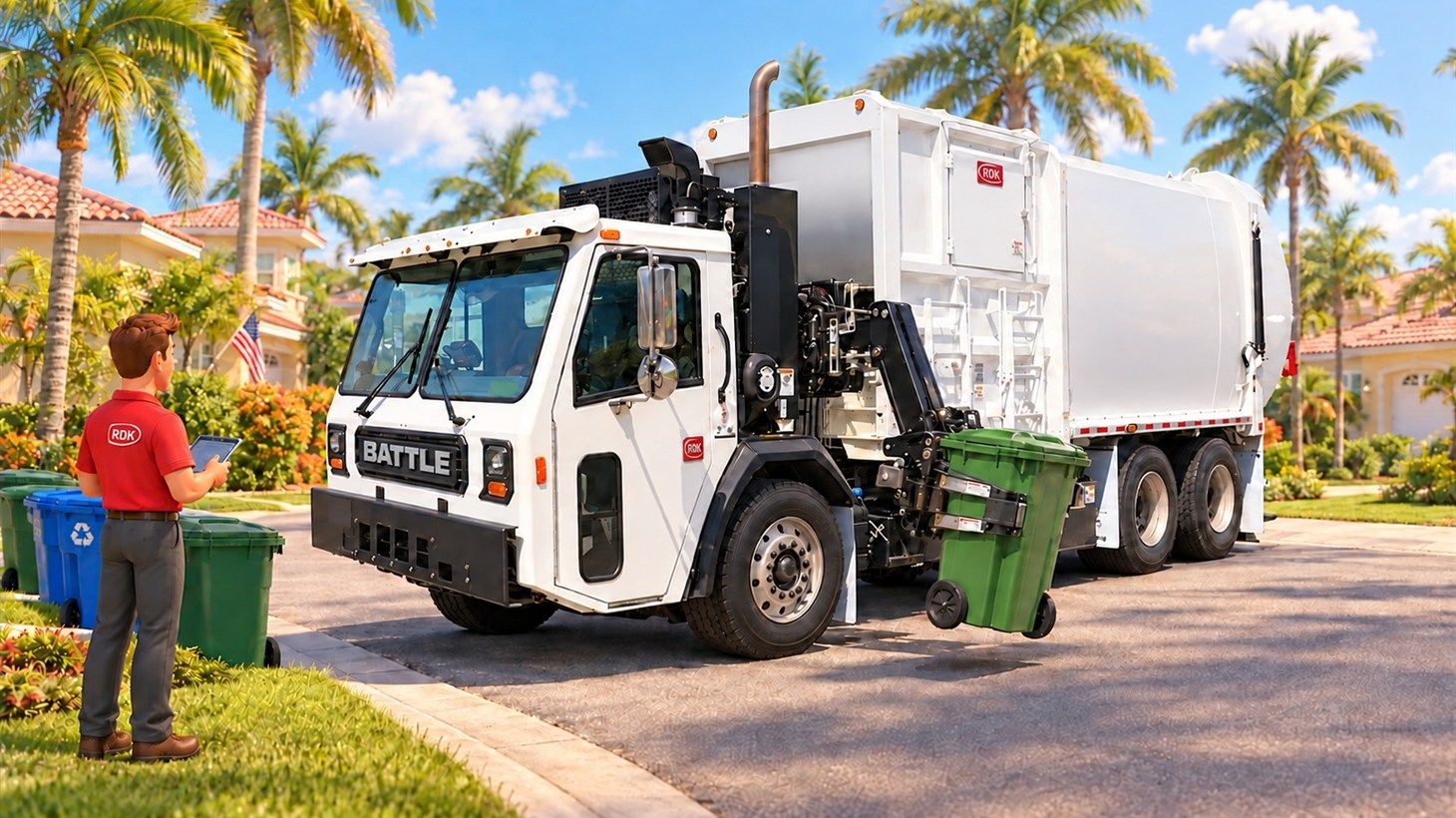
A typical ASL runs a 31-yard body.
Duty cycle
- One arm cycle per cart, 1,000 carts a day, 5 days a week, 52 weeks a year is 260,000 arm cycles a year, each a full out-and-back motion, not a single stroke.
- Each cycle: reach out, grab, lift and pull in, dump, lower, release, then return the arm all the way to its start position. The return is its own hydraulic stroke, so the arm and cylinders see about 520,000 working strokes a year.
- Run hours: about 10 hrs a day × 5 × 52 is roughly 2,600 operating hours a year.
Why cost of ownership cascades
Four systems wear at once, and the failures are staggered.
- Body and arm wear: every cart is a full out-and-return motion, so cylinders, pivots, and home-position switches wear on both the reach-out and the return stroke. Proximity switches and wiring fail from constant motion, cylinders need rebuilds, packer blade shoes wear, and eventually the entire arm assembly needs rebuilding.
- Chassis and suspension fatigue (after about 24 months): residual twisting from the arm working one side, plus relentless stop-and-go, wears chassis, springs, and bushings.
- Emissions wall (18 to 24 months): the DPF is pushed to its max (cleaning is never 100%), DEF tank, pump, and heaters build residual, and DEF sensors fail. Never all at the same time, so you get repeated shop trips.
- A/C and electrical: the automated body carries far more electronic complexity (sensors, switches, controllers, harnesses, in-cab joystick controls), a recurring downtime driver.
| Lease term | Approx. arm cycles | Implication |
|---|---|---|
| 13 months | ~282,000 | Short cycle. Return before heavy wear sets in |
| 18 months | ~390,000 | Still in the high-reliability window |
| 24 months | ~520,000 | Mid-life; grabber and cylinder wear becoming real |
| 36 months | ~780,000 | Major wear points entering rebuild territory |
| 48 months | ~1,040,000 | 1M+ cycles: significant maintenance and downtime |
| 60 months | ~1,300,000 | Max term, max cost of ownership |
Recommendation: lease, 18 to 24 months. The ASL stacks body, chassis, and emissions wear faster than anything else, and a short lease cycles you out before the curve turns up. Buy only on light routes or with strong in-house shop support. Rent for surge, storms, or covering a downed unit so 1,000 homes a day aren't missed.
Rear Loader (25-Yard, Dual-Duty)
The real “it depends” case. The duty mix decides, not the truck type.
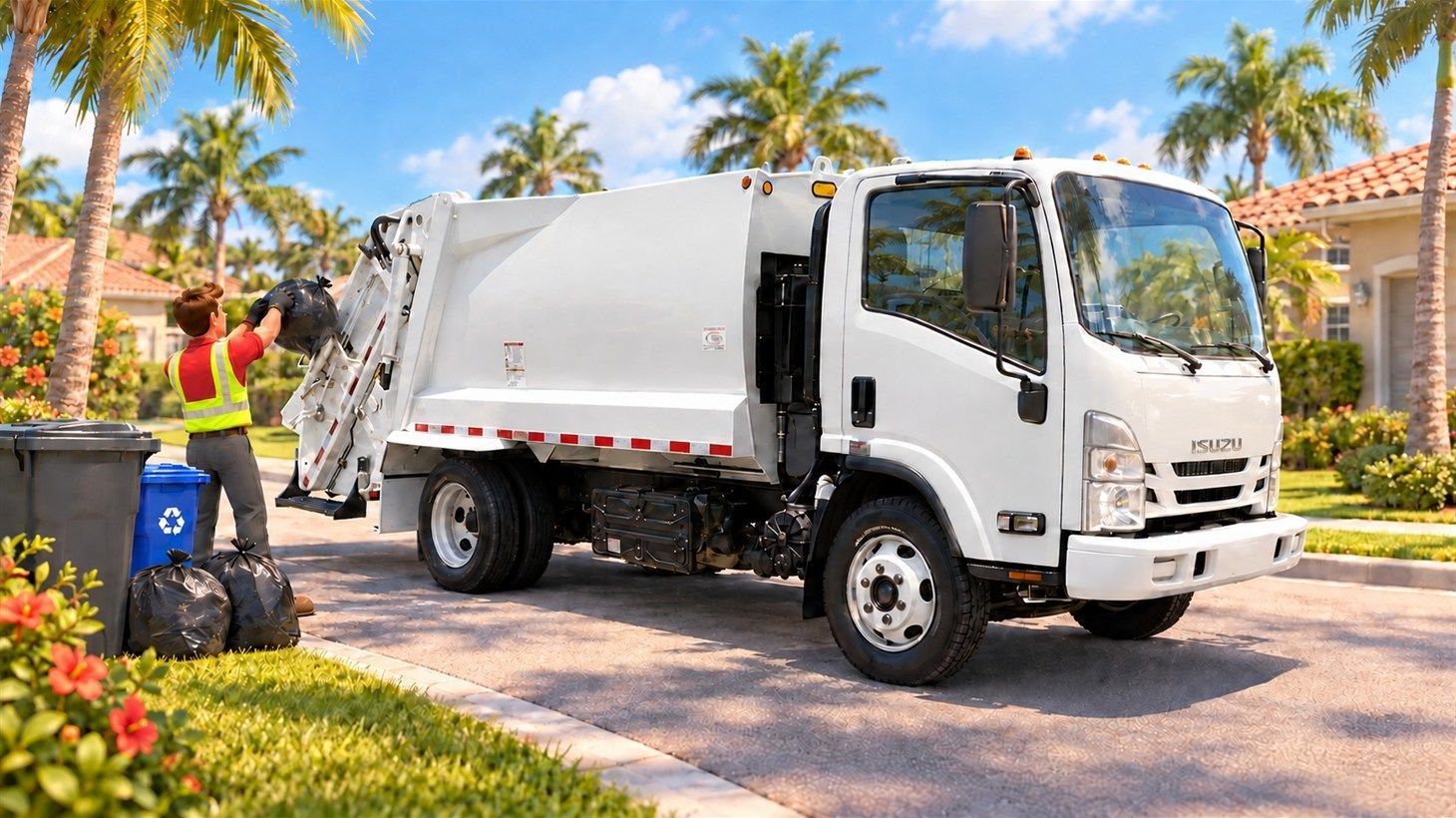
This one is a residential and commercial dual-duty truck, running a winch or kickbar for containers.
Duty cycle
- Residential: 750 carts a day at about 42 lbs, with a hopper packer cycle every 4 carts (about 188 packer cycles a day).
- Commercial: winch or reeving winch, or kickbar, about 25 container dumps a day at about 6 yd and about 489 lbs average.
- 5 days a week, 52 weeks a year, with about 2,600 run hours a year.
- Volume check (1,000 lbs/yd): about 43,725 lbs a day is roughly 1.75 to 2 packed loads a day, or about 520 full pack-out and ejection strokes a year. Those are the highest-stress cycles.
Wear points
- Residential and packer: packer cylinders, slide blade, hopper floor, tailgate hinges and seals, hydraulics.
- Commercial and container: winch cable, sheaves and reeving rollers (or kickbar pivots and cylinder), tailgate, plus extra packer load from heavy 6-yd containers.
- Body fatigue is lower than an ASL. Downtime is driven more by chassis issues: emissions and DPF, ECU, A/C, electrical.
| Lease term | Resi. packer | Comm. dumps | Total events | Implication |
|---|---|---|---|---|
| 13 mo | ~52,900 | ~7,000 | ~218,000 | Light wear, still fresh |
| 18 mo | ~73,200 | ~9,750 | ~302,000 | Packer and winch mid-wear |
| 24 mo | ~97,600 | ~13,000 | ~403,000 | Cable and sheaves, blade slides wearing |
| 36 mo | ~146,400 | ~19,500 | ~604,000 | Cylinders, winch, seals into rebuild range |
| 48 mo | ~195,200 | ~26,000 | ~806,000 | Heavy abuse, higher downtime |
| 60 mo | ~244,000 | ~32,500 | ~1,008,000 | Max cost on a dual-duty unit |
Recommendation: 24 to 36 months (lease often best for dual-duty). A light residential-only route on a stable contract can pencil out to buy. A dual-duty commercial unit wears two systems at once and leans lease: cycle out before the winch cable, sheaves, and packer cylinders hit rebuild range. Rent for peak coverage, contract ramp-up, or downtime.
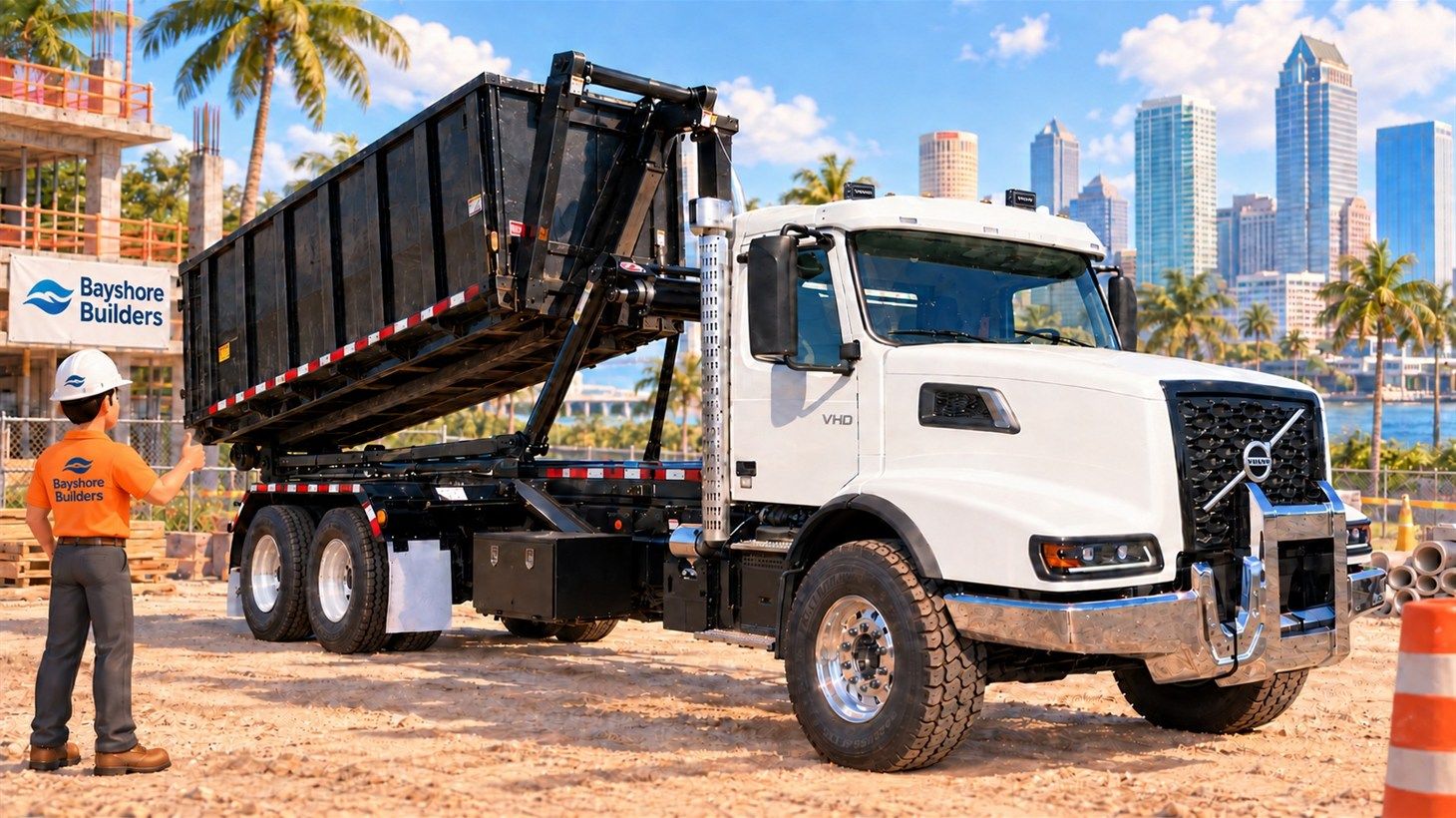
Roll-Off
Least body abuse, but emissions and year-5 chassis wear set the clock.
Duty cycle
- 5 to 9 pulls a day (average about 7), 5 days a week, 52 weeks a year, in 10 to 12 hour days.
- About 7 pulls a day × 5 × 52 is roughly 1,820 pulls a year (about 9,100 over 5 years).
- Each pull: hoist up to load or dump, transport, then return the hoist all the way back down. Like the ASL arm and front-loader forks, every pull is a full out-and-back motion, so the hoist cylinders see about 2 working strokes per pull (about 3,640 strokes a year). Far fewer, larger cycles than an ASL.
Cost-of-ownership timeline
- Body and hydraulics: very reliable for 3 to 5 years. Budget one cylinder rebuild plus routine service through about year 5. By year 5: PTO and pump, second cylinder, suspension rebuild.
- Emissions (the real limiter): idle at sites, short trips to the dump, and low speed mean passive regen rarely completes, so you see frequent manual regens. By year 5: DPF rebuild, DPF sensors fail, second DEF tank.
- Chassis and electrical: by year 5 the chassis shows electrical fatigue.
| Lease term | Pulls | Hoist strokes (up + down) | Implication |
|---|---|---|---|
| 24 months | ~3,640 | ~7,280 | Body and hydraulics fresh; emissions manageable |
| 36 months | ~5,460 | ~10,920 | First cylinder rebuild / hydraulic service window |
| 48 months | ~7,280 | ~14,560 | Sweet spot. Cycle out before the year-5 stack |
| 60 months | ~9,100 | ~18,200 | Year-5 stack: DPF rebuild, 2nd DEF, suspension, chassis electrical |
Recommendation: lease or own to 48 months. The body easily justifies holding the truck, but emissions and chassis-electrical wear converge around year 4 to 5. A 48-month term cycles out right before the year-5 emissions rebuild and the PTO, pump, second-cylinder, and suspension bills land.
Front Loader
The harshest-duty machine. Environment and heat, not just cycles, drive the cost.
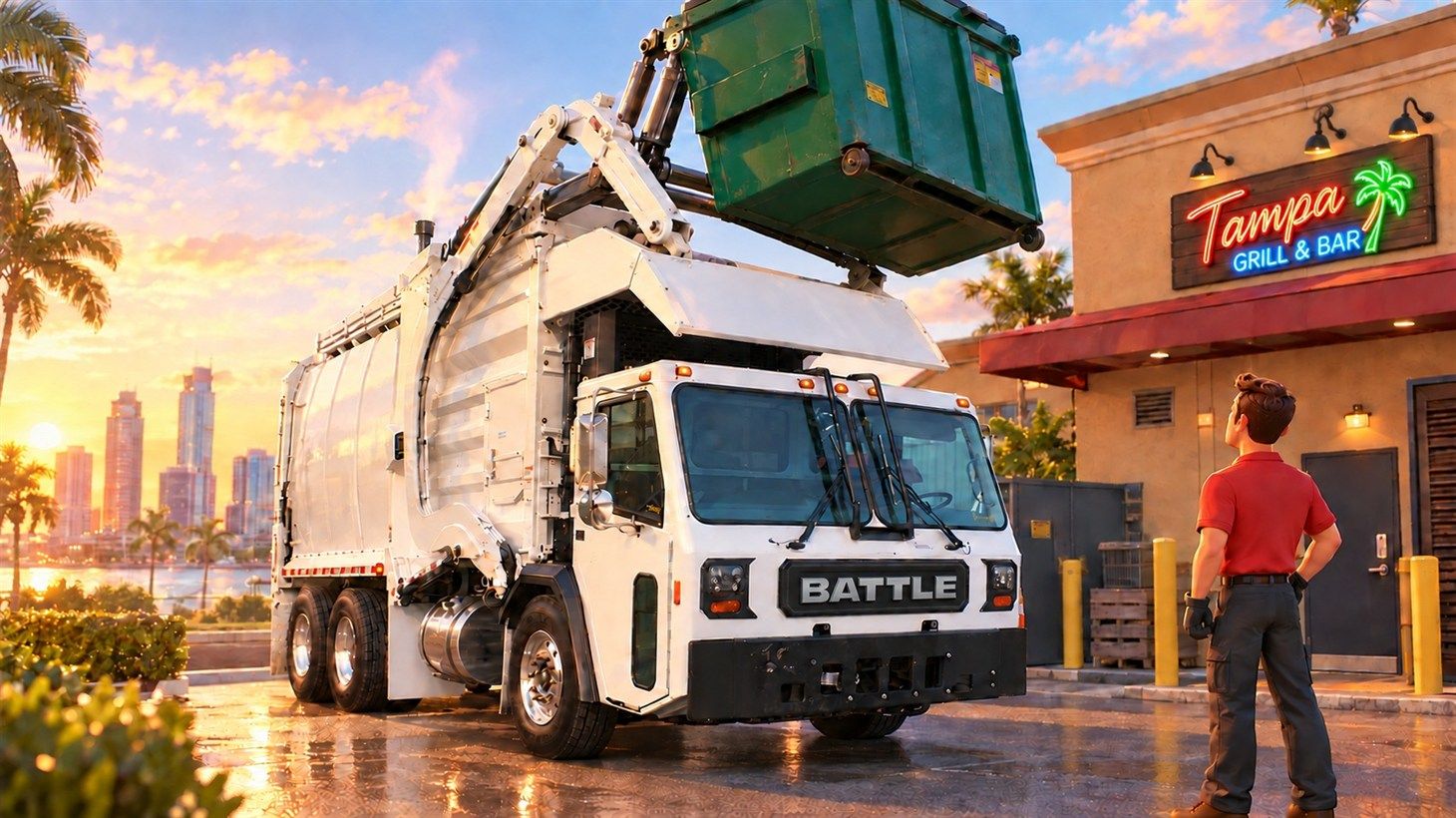
A typical front loader runs a 40-yard body.
Duty cycle
- Very early mornings, crawling alleys in the dark, backing up drive-thrus to reach front-load cans, serving corrals and warehouse areas. Always slow and heavy.
- About 8-yd containers of mixed debris and restaurant trash, about 14 tons a day, 2 loads a day, 5 days a week, 52 weeks a year.
- Volume check (1,000 lbs/yd): 14 tons is about 28 yd packed a day, which fits within a single 40-yd body. Two loads a day is route logistics and dump trips, not body overflow.
- About 30 to 40 container pickups a day is roughly 7,800 to 10,400 lift cycles a year. Like the ASL arm, each is a full out-and-back motion.
- Each pickup: forks engage, lift the container up and over the cab, dump, then return the forks all the way back down to load position. Two fork-cylinder strokes per container means the forks and cylinders see about 15,600 to 20,800 working strokes a year.
- Run hours of about 2,600 a year, mostly low-speed and idle.
Why cost of ownership cascades
- Environment and load abuse (worst of any model): every waste type, including solids, liquids, acids, cleaners, demolition debris, even cut-up logs. Liquid coats the cab shield and fills the body with “juice” and bacteria, soaking cylinders and hoses, and attracts rats and maggots that chew wiring.
- Fork and hydraulic wear (out-and-back, every container): because each pickup is a full up-and-over and return-to-load motion, the fork cylinders, pivots, and arm bushings wear on both the lift and the return stroke. That doubles the real cycle count the hydraulics see versus a simple “lift” tally.
- Heat, the silent killer: slow speed means limited passive regen, so exhaust heat is trapped under the cab and in front of the body. High temps raise hydraulic fluid temperature, so cylinders, valves, and controls wear quickly.
- Electronics and sensors (the #1 downtime driver): trash behind the blade stops the packer panel from reading the sensor or bends it out of place, and limited techs to repair quickly means longer downtime per failure.
- Chassis: slow, heavy, stop-and-go duty makes chassis failure “a timer waiting to go off.”
| Lease term | Container pickups | Fork strokes (out + back) | Implication |
|---|---|---|---|
| 24 months | ~15,600–20,800 | ~31,200–41,600 | Sweet spot for extreme / heavy routes |
| 36 months | ~23,400–31,200 | ~46,800–62,400 | Sweet spot for lighter routes |
| 48 months | ~31,200–41,600 | ~62,400–83,200 | Heavy abuse: high maintenance, frequent downtime |
| 60 months | ~39,000–52,000 | ~78,000–104,000 | Max term, max cost on the harshest-duty unit |
Recommendation: 24 to 36 months (use-dependent). Extreme restaurant or demolition routes in hot, corrosive conditions point to about 24 months. Lighter routes point to about 36 months. Past that, heat-driven hydraulic failures, sensor and electrical downtime, corrosion, and chassis fatigue stack up fast, and scarce techs make downtime even more costly.
Stroke-Based Cost of Ownership
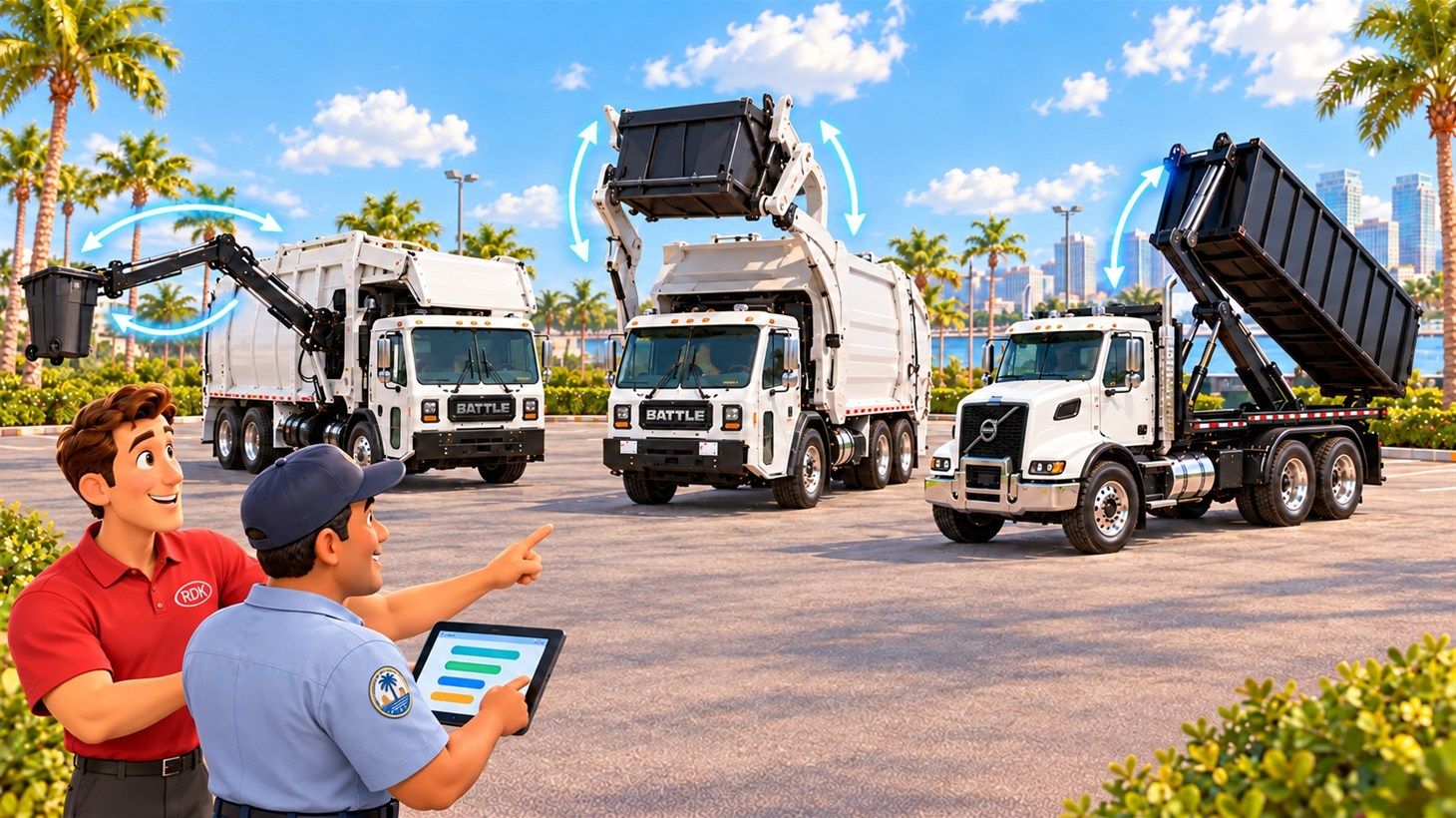
Every hydraulic-bodied refuse truck works on an out-and-back motion: the arm, fork, or hoist extends to do the job, then returns to its start position. That is two working strokes per handling event. Counting only the “lift” or “pull” undercounts what the cylinders, pivots, switches, and hydraulics actually endure.
The tables below normalize the ASL, front loader, and roll-off to working strokes so a municipal client can compare wear on the same basis.
- Handling events are the route metric the customer already thinks in (carts, pickups, pulls).
- Working strokes are events × 2 (out + back), which is what the hydraulics truly cycle.
- Cycle intensity ranks how fast each body stacks cost of ownership.
| Truck type | Per-event motion | Annual handling events | Annual working strokes | Cycle intensity |
|---|---|---|---|---|
| ASL | Reach, grab, lift, dump, return arm home | ~260,000 carts | ~520,000 | Extreme: fastest cascade |
| Front loader | Engage, up-and-over, dump, return forks down | ~7,800–10,400 pickups | ~15,600–20,800 | High: environment + heat amplify wear |
| Roll-off | Hoist up, load/dump, return hoist down | ~1,820 pulls | ~3,640 | Moderate: emissions / year-5 driven |
Working strokes by lease term (out-and-back basis)
| Lease term | ASL arm strokes | Front loader fork strokes | Roll-off hoist strokes | What's happening on the truck |
|---|---|---|---|---|
| 13 mo | ~564,000 | ~16,900–22,500 | ~3,940 | All bodies still in the high-reliability window |
| 18 mo | ~780,000 | ~23,400–31,200 | ~5,460 | ASL approaching its emissions wall (18 to 24 mo) |
| 24 mo | ~1,040,000 | ~31,200–41,600 | ~7,280 | ASL return point; front loader sweet spot (heavy) |
| 36 mo | ~1,560,000 | ~46,800–62,400 | ~10,920 | Front loader sweet spot (light); roll-off first rebuild |
| 48 mo | ~2,080,000 | ~62,400–83,200 | ~14,560 | Roll-off sweet spot; ASL and front loader deep in rebuild range |
| 60 mo | ~2,600,000 | ~78,000–104,000 | ~18,200 | Max term, max cost of ownership on every body |
At a Glance: Sweet Spots by Truck Type
| Truck type | Typical body | Annual workload | Limiting factor | Recommended term |
|---|---|---|---|---|
| Automated side loader | 31 yd | ~260,000 arm cycles | Body + chassis + emissions + electronics (fastest cascade) | Lease, 18–24 mo |
| Rear loader (dual-duty) | 25 yd | ~200,000 handling events | Chassis, emissions, electrical; less body fatigue | 24–36 mo |
| Roll-off | — | ~1,820 pulls | Emissions / regen + year-5 chassis and driveline | 48 mo |
| Front loader | 40 yd | ~7,800–10,400 pickups (~15.6–20.8K fork strokes) | Environment, heat, electronics; chassis | 24–36 mo (use-dependent) |
The Bottom Line
There's no single right answer, and that's the point.
A high-cycle ASL is almost always a lease-first, short-term truck. A roll-off can be owned or leased out to four years. A rear loader or front loader lands in the middle and depends on the route.
RDK helps you read your real duty cycle and pick the option (own, lease, or rent) that keeps your total cost of ownership down and your trucks on the road.
RDK Truck Sales · Tampa, Florida
Sticker price is one day. Cost of ownership is every day after.
Match the lease term to the truck's real stroke count and you cycle out before the expensive years, not after. RDK Truck Sales: we build partnerships, not just customers.
Call (813) 241-0711
DEF is 32.5% urea and 67.5% deionized water. Heat and time are what push it off spec, and off-spec fluid is what kills sensors, catalysts, and uptime.

Richard Kemner breaks down the EPA 2027 rule: 82% lower NOx, warranties jumping to 450,000 miles, and whether refuse fleets should buy now or wait.

Weighing lease vs. purchase for your refuse trucks? See how RDK's 3-year lease eliminates warranty disputes and unpredictable repair costs.