
EPA 2027 Emission Standards: What Waste Haulers Need to Know Right Now
Author
Richard Kemner
Date Published

EPA 2027 Emission Standards: What Waste Haulers Need to Know Right Now
The refuse industry is heading into 2027 facing unprecedented regulatory uncertainty.
Here’s where things stand today, what heavy-duty truck manufacturers are doing, and how waste haulers can plan their fleet purchases without getting caught off guard.
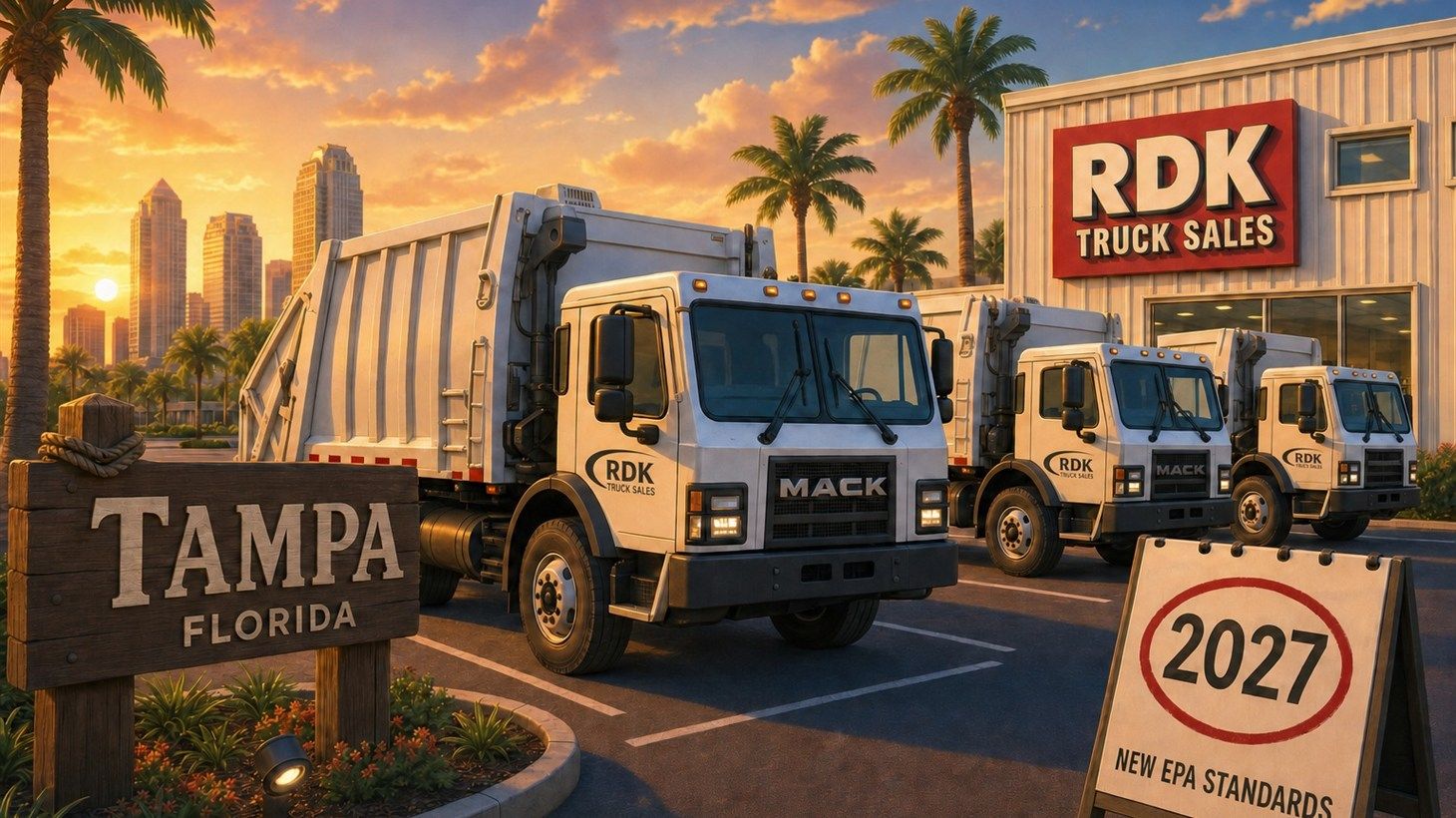
The Current Situation
EPA 2027 standards remain on the books, but they are under increasing pressure. The Biden-era heavy-duty rules call for an 82.5% reduction in NOx emissions for model-year 2027 trucks, establishing the current legal baseline.
However, several recent policy shifts have created significant market fluidness:
- March 2025: EPA Administrator Lee Zeldin announced the agency would reconsider these standards as part of a broader deregulatory initiative.
- June 2025: President Trump signed resolutions revoking California’s Clean Air Act waivers, directly impacting CARB’s Advanced Clean Trucks and Low-NOx Omnibus rules in participating states.
- July 2025: The EPA proposed rescinding the 2009 Endangerment Finding—the legal cornerstone for federal greenhouse gas regulation on vehicles.
These combined moves have added friction for fleets trying to build reliable 2027 procurement strategies.
What EPA 2027 Requires for Refuse Trucks
As written, the 2027 standard introduces sweeping mandates for diesel engines and aftertreatment systems:
- Drastic NOx Reductions: Limits drop from 0.20 g/hp-hr to 0.035 g/hp-hr (an 82.5% reduction).
- Extended Useful Life Requirements: Coverage extends to 650,000 miles (up from the traditional 100,000-mile benchmark for refuse applications).
- Longer Warranty Coverage: Mandatory aftertreatment warranties increase from 100,000 miles to 450,000 miles.
- Next-Gen Hardware: Systems will require cylinder deactivation, dual aftertreatment canisters, heated DEF dosers, and higher-voltage electrical architectures.
- Higher Acquisition Costs: Early baseline projections estimated cost increases of $20,000 to $30,000 per truck.
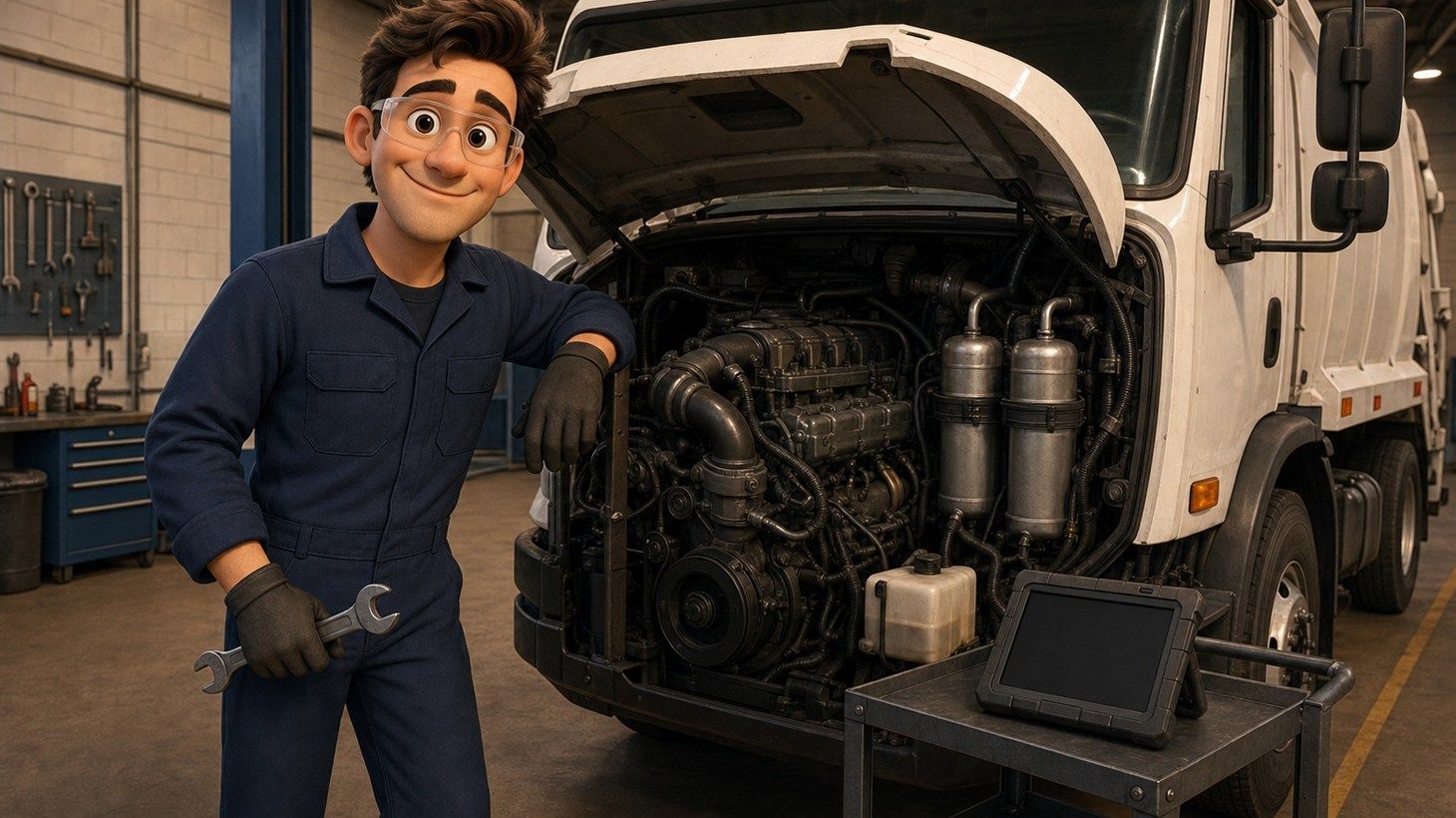
The Fleet Planning Dilemma
While the administration has signaled a desire to roll back these rules, federal regulations do not change overnight. Modifying or repealing established standards requires formal rulemaking, public comment periods, and legal defensibility—all while court challenges surrounding state and federal authority continue to mount.
This leaves haulers in a tight spot. Industry analysts warn that as model year 2027 approaches, altering engine development pipelines becomes exponentially harder without disrupting suppliers and assembly lines.
Furthermore, the historical pre-buy cycle anticipated for 2025–2026 failed to materialize normally. Many fleets remain in a "wait-and-see" posture, contributing to a sharp decline in North American heavy-duty engine sales reported by major suppliers like Cummins.
What Truck Manufacturers Are Doing
The bottom line for fleet managers: OEMs are continuing to build 2027-compliant engine platforms.
- Daimler (Freightliner, Western Star): Confirmed that previously announced plans remain on track, including fully compliant 2027 engine lineups.
- PACCAR (Kenworth, Peterbilt): Preparing for multiple regulatory outcomes and ensuring full compliance with whatever rules remain active.
- Volvo and Mack: Confirmed alignment with the final regulatory framework, whichever path emerges.
- Cummins: Has already launched its next-generation X15 platform, engineered specifically to satisfy both EPA and California 2027 standards.
Because truck makers have already invested billions in engineering and capital expenditures, these platforms will likely enter production regardless of political shifts in Washington.
Where relief is most likely: Manufacturers are primarily seeking flexibility around long-term warranty liability rather than abandoning the core engine technology. If mandatory warranty terms are softened, the per-truck price premium could settle closer to $8,000–$10,000 rather than early $30,000 projections.
What This Means for Your Refuse Fleet
For waste haulers, the 2027 standard impacts three key operational areas:
1. Truck Pricing
If the rules take effect as written, expect significantly higher initial purchase prices for new diesel refuse trucks. Even if warranty mandates are scaled back, technology costs mean price tags will still rise. Budgeting with a price buffer is essential.
2. Purchase & Replacement Timing
OEMs are actively executing model-year 2026 production schedules. Waiting too long to commit to replacements leaves fleets vulnerable to tightened order banks, extended lead times, and restricted spec availability.

3. Technology & Reliability
The technological transition isn't entirely negative. Next-generation aftertreatment hardware is specifically engineered to handle the rigorous, high-idle, stop-and-go duty cycles typical of refuse collection. Features like cylinder deactivation can also boost fuel economy. The key issue isn't whether the technology works, but how much financial risk gets passed along to the buyer.
Practical Action Steps for Fleet Owners
Strategic preparation beats regulatory speculation. To stay ahead:
- Budget Flexible Ranges: Plan capital expenditures around higher equipment costs until market pricing stabilizes.
- Buy Based on Operational Need: Base replacement schedules on maintenance trends, vehicle age, and route demands—not political headlines.
- Maintain Direct Dealer Communication: Keep close contact with your dealer to monitor order-bank openings, lead times, and OEM updates.
- Explore Alternative Fuels: Evaluate Natural Gas (CNG/RNG) options, which may offer a lower-emissions pathway with fewer diesel-related regulatory hurdles.
- Mark Mid-2026 on Your Calendar: If federal rules remain unchanged by mid-2026, compliant engines will be the definitive standard for model-year 2027.
RDK Truck Sales · Tampa, Florida
The Bottom LineEngine technology is advancing regardless of regulatory shifts, and truck manufacturers are executing their plans accordingly. The ultimate variables are purchase price and warranty liability.
For waste haulers, proactive planning is the safest strategy: know your lifecycle numbers, build flexibility into your equipment budgets, and stay aligned with trusted industry partners.
At RDK Truck Sales, we track regulatory changes daily to help fleets make smart, profitable equipment choices. Give us a call and let’s talk through what makes sense for your operation.
How can we help you navigate the EPA 2027 emission standards?

Richard Kemner breaks down the EPA 2027 rule: 82% lower NOx, warranties jumping to 450,000 miles, and whether refuse fleets should buy now or wait.

Weighing lease vs. purchase for your refuse trucks? See how RDK's 3-year lease eliminates warranty disputes and unpredictable repair costs.

Battle Motors transformed 75-year-old Crane Carrier into a fast-growing refuse truck maker. Shop Battle Motors trucks at RDK Truck Sales in Tampa, FL.