
Hydraulic System Maintenance
Author
Richard Kemner
Date Published

Garbage Trucks · Spring Maintenance
Hydraulic System Maintenance
By Richard Kemner, Founder • RDK Truck Sales • Tampa, FL • 40+ Years in the Refuse Industry.

Getting Your Fleet Ready for Spring
Winter is hard on garbage trucks. When the weather shifts from cold to warm, hidden wear can turn into real problems, especially in your hydraulic system.
Before spring schedules get busy, use this checklist to catch leaks, worn components, contaminated fluid, and other issues that can lead to unnecessary downtime.
✅ SPRING HYDRAULIC CHECKLIST
- ☐ Pull and inspect hydraulic fluid sample
- ☐ Change all hydraulic filters (return line, suction, in-line)
- ☐ Inspect every hose for cracks, bulging, and chafe marks
- ☐ Check all fittings for leaks
- ☐ Inspect cylinder rods for scoring and pitting
- ☐ Look for weeping seals on all cylinders
- ☐ Test full system operation under load
- ☐ Listen for pump noise, cavitation, or whine
- ☐ Verify reservoir fluid level after full cycle
- ☐ Check breather cap on reservoir for blockage
I’ve been in the refuse business since 1983. Started riding routes at five in the morning just to learn. Over 40 years later, I’m still learning. But one thing I can tell you with absolute confidence is this: your hydraulics are the heartbeat of a refuse truck. If they go down, you go down. And spring is when they like to remind you of that.
Why Winter Beats Up Your Hydraulics
Cold weather changes how your hydraulic system performs. As temperatures drop, hydraulic fluid thickens, forcing pumps to work harder and slowing cylinder movement. At the same time, hoses and seals become less flexible while metal components expand and contract with temperature swings, creating wear that may not show up until spring.
Over the years, we’ve seen that the trucks with the most spring breakdowns are usually the ones that received little attention during winter. They kept running, and as temperatures rise, that cold-weather microdamage starts showing up as real problems.
Hydraulic Fluid: Check It, Change It, Get It Right
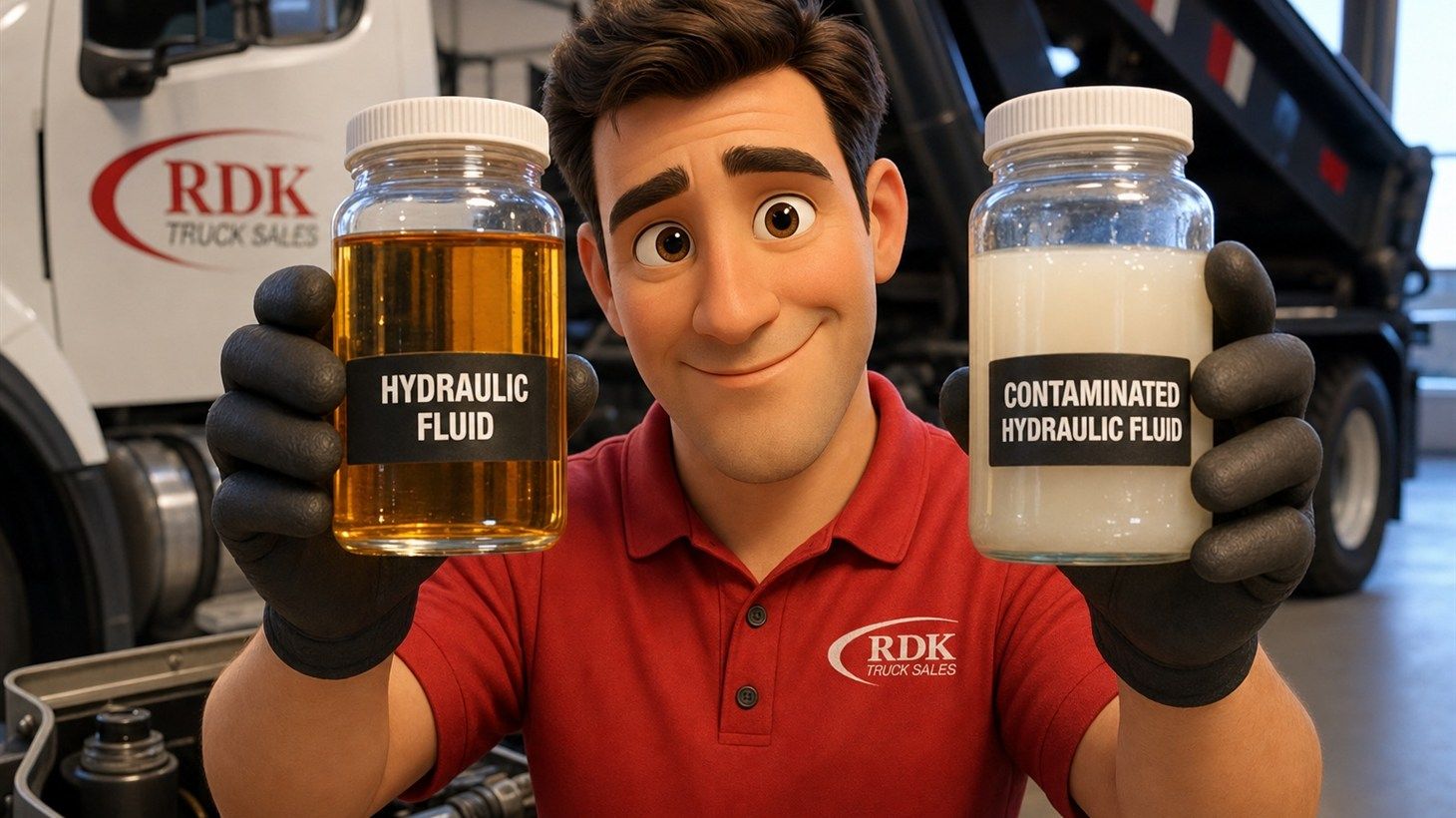
This is step one, and it’s the most important. Pull a fluid sample and look at the color. Fresh hydraulic fluid should be clear amber.
If the fluid looks dark, milky, or has visible particles, you may have contamination. Milky fluid usually means moisture has entered the system, which can cause serious damage to pumps and valves.
Even if the fluid looks okay, check when it was last changed. Most manufacturers recommend a full hydraulic fluid change every 2,000 to 4,000 operating hours, depending on the application and operating conditions. If your trucks worked hard all winter and you’re near that interval, spring is a good time to replace it.
One thing we tell every customer is not to mix fluid types. If your system calls for AW-46, use AW-46. If it calls for AW-68, use AW-68. Mixing viscosities or brands can lead to foaming, overheating, and accelerated wear. When in doubt, check the operator’s manual or contact the body manufacturer.
Hoses and Fittings: Look for the Warning Signs
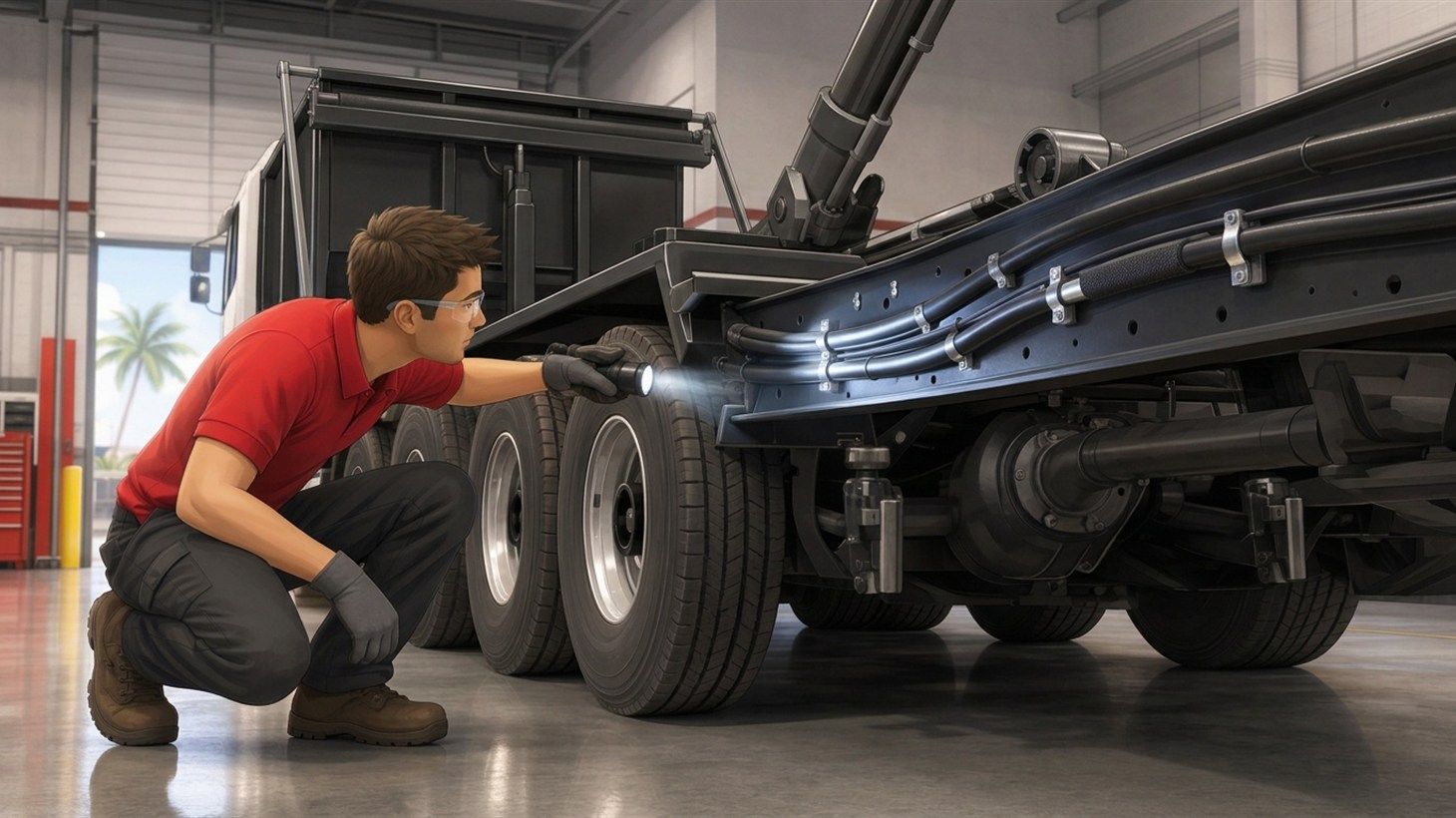
Walk around every truck in your fleet with a flashlight and inspect every hydraulic hose you can see. Look for cracks in the outer cover, bulging along the hose, wet spots or oil film around fittings, and any hose that appears to be rubbing against the frame or body.
Winter cold makes rubber brittle, while spring warmth causes it to expand. That repeated contracting and expanding can weaken a hose over time. A hose that made it through winter can still fail on the first warm day when the rubber finally gives out. Pay special attention to hoses near heat sources, such as the exhaust manifold and engine, as well as hoses routed through tight spaces where rubbing can occur.
At RDK, we’ve seen hoses fail on route and release 40 gallons of hydraulic fluid onto a residential street. That creates an environmental and safety issue, along with an expensive tow and cleanup. A ten-minute visual inspection can help prevent all of it.
Cylinders and Seals
Your packer, tailgate, and body-lift cylinders do the heavy lifting every day. After a hard winter, inspect each cylinder rod for scoring, pitting, and oil weeping around the seals.
Even a small drip can signal a compromised seal. As temperatures rise and the system heats up under load, that leak can quickly get worse. We have seen packer cylinders lock up mid-cycle after a seal failed and pressure was lost, leaving a truck off route and a crew waiting for service.
Filters Are the Cheapest Insurance

Changing your hydraulic filters is one of the simplest steps in spring hydraulic maintenance. Replace the return-line, suction, and in-line filters your system uses.
After winter, those filters may be holding contaminants created by condensation and normal system wear. A clogged filter forces the pump to work against restriction, building heat and accelerating wear throughout the system. At RDK, we stock filters for the bodies and chassis we sell, so there is no reason to skip this step.
Test the System Under Load
Once you have checked the fluid, hoses, cylinders, and filters, run the hydraulic system through a full cycle under load. Watch for slow operation, jerky movement, unusual noise, or vibrations that were not there before.
Cycle the packer, tailgate, and body lift (if applicable) several times. A system that works fine without a load but struggles under one may be pointing to a worn pump, an improperly adjusted relief valve, or internal cylinder bypass that has not started leaking externally.
Follow the Spring Maintenance Series
RDK Spring Maintenance Series
- Blog 1: Hydraulic System Maintenance: Getting Your Fleet Ready for Spring
- Blog 2: Exhaust System & Body Maintenance: Preparing for Spring Rain and Wet Weather
- Blog 3: DOT Inspection & Chassis Readiness: A Friendly Reminder That Could Save Your Fleet
Subscribe to our email list or follow RDK online so you do not miss the next article.
Let’s Talk Trash
After more than 40 years in the refuse industry, we still learn something from every fleet we work with. If you have a maintenance practice that works well for your operation, a question about your hydraulic system, or a truck that needs attention, we would be glad to talk.
Call RDK Truck Sales at (813) 241-0711, stop by our Tampa shop, or contact us online. We service what we sell, and we are here to help keep your fleet on the road.
RDK Truck Sales · Tampa, Florida
“We Service What We Sell”
Call (813) 241-0711Disclaimer: The information in this hydraulic system maintenance blog is based on over 40 years of hands-on experience in the refuse industry. It is intended for general informational purposes only. Every fleet, every route, and every truck is different. We strongly encourage you to conduct your own due diligence, consult with qualified technicians, and follow your manufacturer’s specific maintenance guidelines when making equipment servicing and purchasing decisions. If you have questions or want to talk shop, give us a call. We’re always learning and we welcome your feedback.

After 40 years in refuse, RDK's Richard Kemner shares real cold-weather hydraulic maintenance tips to keep your fleet running all winter.

DEF freezes at 12°F and hydraulic fluid thickens fast. See how extreme cold hits refuse trucks and get a pre-trip checklist to avoid breakdowns.

Avoid the 5 costly roll-off truck maintenance mistakes that wreck hydraulics, cables, and PTOs. Get RDK's 40+ years of fleet maintenance tips.